Ventilation repair
Viking hood repair for air that has to leave the kitchen
A range hood has one job: carry hot, greasy air out of the kitchen before it drifts into the rest of the home. We repair Viking wall, island and downdraft hoods that have turned loud, weak or dark, and we tell you plainly whether the trouble is a filter you can wash tonight or a blower that needs a technician.
Rated 4.9 by clients across 187 reviews Open the reviews page
A roaring fan is not the same as draw
The hood complaint we hear most is a contradiction: the blower sounds like it is working harder than ever, yet smoke from a seared steak still rolls toward the living room. Volume says little about airflow. A fan can roar while moving very little air if the filters are packed with grease, if the duct is partly choked, or if the blower wheel is caked with residue and spinning out of balance.
That is why a hood visit begins with airflow rather than with the switch. Our technician pulls the filters, looks at the blower wheel and motor, checks the damper where the duct leaves the hood, then runs every speed to compare what you hear with what the hood actually pulls away from the burners. Island hoods hang in open air with no wall to guide rising smoke, so even a modest loss of draw shows up quickly. Downdraft units, which rise from behind the cooktop, add a lift mechanism and a blower tucked under the counter.
Ventilation trouble is often tied to the cooking underneath it. A burner throwing a yellow, sooty flame sends up smoke the hood should never have had to handle; our pages on cooktop repair and range repair cover that side, and a single trip can look at the burners and the hood together.
Straight answer · 1/3
Why does my Viking hood fan run but not pull smoke?
Most often the air has nowhere to go: grease-loaded filters, a blower wheel coated in residue, a damper stuck closed, or a duct that is blocked or crushed. Wash the metal filters first. If the draw stays weak afterward, a technician needs to check the blower, the damper and the duct run.
Six signals a Viking hood sends
Symptom order
Every one of these leads back to a separate component, and a couple you can rule out yourself before booking.
-
The fan will not come on at any speed
Likely A failed blower motor, a weak capacitor, a loose wire or a worn fan switch
-
The fan runs, yet smoke hangs over the cooktop
Likely Clogged filters, a dirty blower wheel, a damper that will not open or a restricted duct
-
Rattling, buzzing or a hum that grows louder each week
Likely Bearings in the blower motor wearing out, a fan wheel that is cracked or heavy with grease on one side, or a length of duct shaking against the framing
-
The work lights stay dark
Likely Burned-out lamps, a failed socket or light switch, or a wiring fault on the light circuit
-
Speed buttons or touch controls ignore you
Likely A failed control board, a stuck membrane keypad or a loose ribbon connection behind the panel
-
Grease drips back onto the burners
Likely Saturated filters, a full or misaligned grease trap, or a seal that has let go
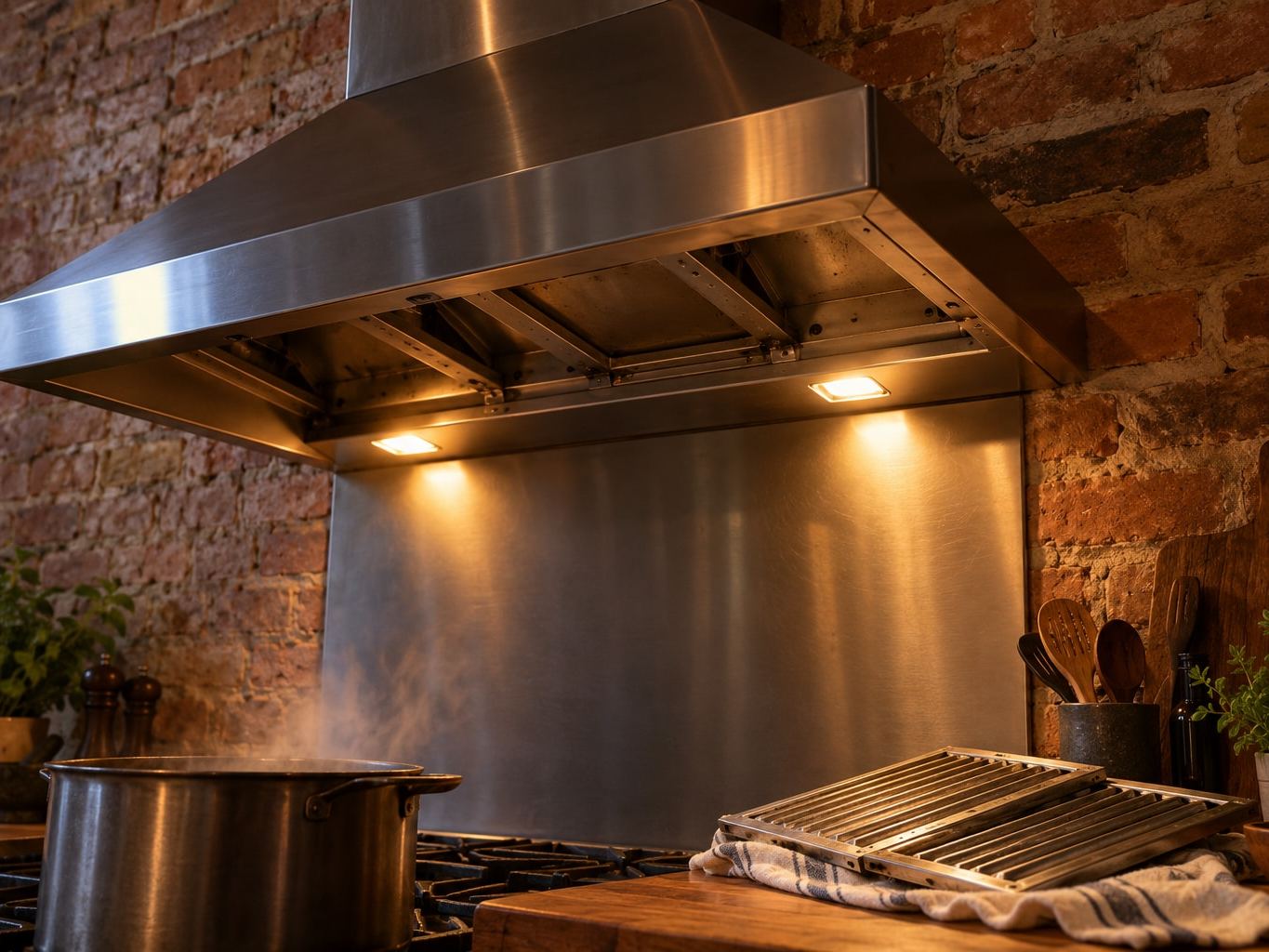
How often the filters need a wash
At a glance
The metal mesh or baffle filters in a Viking hood come out by hand and go straight into the sink. How often depends on what happens on the burners below.
| How you cook | Wash the metal filters | Signs you are overdue |
|---|---|---|
| Searing, wok cooking or frying most days | About once a month | Smoke lingers after cooking, the fan sounds louder, a grease film forms on the canopy |
| Moderate home cooking a few nights a week | Every two to three months | Weaker pull on high speed, a tacky feel on the filter face |
| After a big holiday meal or a dinner party | Check them the next morning | Grease beading on the mesh, cooking smells that hang around into the next day |
Straight answer · 2/3
How often should I clean Viking hood filters?
About once a month if you sear, fry or wok-cook often, and every two to three months with moderate cooking. The metal filters lift out by hand; soak them in hot soapy water, rinse, let them dry fully and slide them back in. Many owners also run them through the dishwasher, but check your manual first.
What people assume about hood service
Corrected on the ticket
-
Heard
A loud fan means a strong fan.ActuallyNoise often means the opposite: a struggling blower or a duct shaking in its hangers. Draw is judged by what leaves the kitchen, not by how it sounds.
-
Heard
You can put in a brand-new Viking hood for me.ActuallyWe do not install new hoods. We repair the Viking hood you already have; a new hood or a new duct run is work for an HVAC contractor.
-
Heard
Filters only need attention once they turn black.ActuallyMetal filters are washed, not thrown away, and they clog well before they look dark. Washing them on schedule keeps the motor from straining.
-
Heard
A hood that drips grease just needs a wipe.ActuallyDripping means the filters or grease trap are full or something is out of line. Wipe it, then fix the cause, because grease collecting above open flame is a fire risk.
Straight answer · 3/3
Why is my Viking range hood so loud?
A noisy hood usually means the blower motor bearings are going, the fan wheel is dirty or cracked and spinning off balance, a mounting has worked loose, or a duct section is rattling against framing. Clogged filters make the blower strain too. If clean filters do not quiet it, have the motor and wheel checked before the bearing gives out.
Range hood questions, answered
- Do you repair island and downdraft Viking hoods, or only wall models?
- All three. Wall and island hoods share most parts, including the blower, filters, lights and controls, while downdraft units add a lift mechanism and a blower below the counter. We work on Viking hoods only.
- Is it okay to keep cooking while the hood is broken?
- Gentle cooking is fine for a short stretch. Hold off on high-heat searing and frying until it is fixed, because the smoke and grease have nowhere to go and end up on cabinets, ceilings and upholstery.
- Can you install a new Viking ventilation system?
- No. We repair existing Viking hoods only. For a new hood or new ductwork, bring in an HVAC contractor; once it is up and running, we can look after the Viking hood itself.
- What does a Viking hood repair usually come to?
- It begins with our $89 trip charge, which is folded into the repair once you say go. Swapping a lamp, a switch or a whole blower motor are very different jobs, so the repair figure is given once the hood has been tested and before anything is replaced. See the pricing page for how it all fits together.
- How do I keep a Viking hood healthy between repairs?
- Wash the filters on schedule, wipe the canopy so grease does not build up around the lights and controls, and leave the fan running a little while after the burners go off. Our guide to caring for a Viking Professional range also covers the hood above it.
Order up
Smoke still hanging in the air?
Ring us or book online. One $89 trip covers the hood and any other Viking in the kitchen, and the repair price follows the testing.
$89 service call: one flat trip charge, whether the technician opens up a single Viking or every Viking in the kitchen; that sum then comes off the repair total if you sign off on the work.